


One Focal Piece Makes Busy Women Accessorize Outfits Fast
Pick one focal accessory and let everything else support it. That single move fixes most “why doesn’t this look finished” moments. Then check formality matches the outfit and cap yourself at three accessory categories. Styling guides often build every recipe around this rule, and it works whether you’re dressing for a coffee run or a wedding.
TL;DR:
- Focus on one statement accessory to create a cohesive look, rather than mixing multiple bold pieces that compete for attention.
- Limit accessories to three categories like jewelry, bag, or shoes to maintain a balanced, polished appearance.
- Match accessories’ formality to the outfit and repeat one metal or color to enhance cohesion and sophistication.
- Choose jewelry based on neckline, with specific rules for bags, belts, shoes, and scarves to support each outfit type.
- Incorporate seasonal trends like sculptural metal jewelry and silk scarves as focal points, while keeping supporting pieces neutral.
Table of Contents
- How Do You Accessorize an Outfit the Right Way?
- What Accessories Should You Choose by Category?
- A Two-Minute Accessorizing Checklist
- Copy These Outfit-and-Accessory Recipes
- Fix These Common Accessorizing Mistakes
- Where Maronko Fashion’s Styling Guides Come In
- How Do You Balance Colors and Patterns With Accessories?
- What Accessory Trends Should You Adapt Each Season?
- How Do You Mix Metals and Materials With Confidence?
- Can Accessories Really Upgrade a Basic Outfit?
- How Do You Choose Accessories for Your Body and Personal Style?
- A Final Word on Keeping It Simple
- Shop the Pieces That Make These Rules Work
- Sources
- FAQ
How Do You Accessorize an Outfit the Right Way?
Four rules cover almost every accessorizing decision you’ll ever make. Learn them once and you stop second-guessing yourself in the mirror.
The one focal point rule. Choose a single standout piece, a chunky necklace, sculptural earrings, a bold bag, and let the rest recede. Subtracting is harder than adding, but it’s the difference between “styled” and “trying too hard.” Stylists who accessorize a dress this way always start by picking what leads before adding anything else.
The rule of three. Count your accessory categories: jewelry, bag, belt, shoes, scarf, hat, sunglasses. Stop at three. A watch, drop earrings, and a crossbody bag is plenty for most days.
Match weight to formality. Fine gold chains read casual; wide cuffs and statement rings read dressed up. A structured stylist guide can shift an outfit’s whole mood without you changing a single piece of clothing.
Repeat one element. Gold hardware on your bag, gold hoops, a gold watch band. That repetition is what makes a look feel pulled together instead of accidental.
- Focal point first, everything else supports it
- Three categories maximum
- Formality should match, not clash
- One repeated metal, color, or texture ties it all
Pro Tip: Lay your outfit and accessories flat on the bed before you put them on. If you can spot two things fighting for attention, one has to go.
What Accessories Should You Choose by Category?
Each accessory type has its own quick decision rule. Learn these once and you’ll never stand in front of your closet paralyzed again.
Jewelry. Let the neckline decide. A crew neck or turtleneck wants earrings to lead; a V-neck or scoop wants a pendant necklace. Choose one lead metal (gold, silver, or mixed intentionally) and layer necklaces in three lengths for texture without clutter. The neckline jewelry guide breaks this down cut by cut, and if you want ready-made combinations, three layering necklace stacks take the guesswork out entirely.
Bags. Match the bag to the occasion and your outfit’s silhouette. Clutches for evening, structured shoulder bags for work, crossbody for errands, totes for travel or the office.
Belts. Belt at the natural waist to define shape, or lower on the hip for a relaxed look. Wide belts shorten the torso visually; skinny belts elongate. Tonal belts blend in; contrast belts become the focal point. A well-placed belt can instantly shape a dress that otherwise reads shapeless.
Shoes. Neutral shoes anchor a bold outfit; colorful or textured shoes become the statement on a simple one. Nude or matching-tone shoes lengthen the leg line.
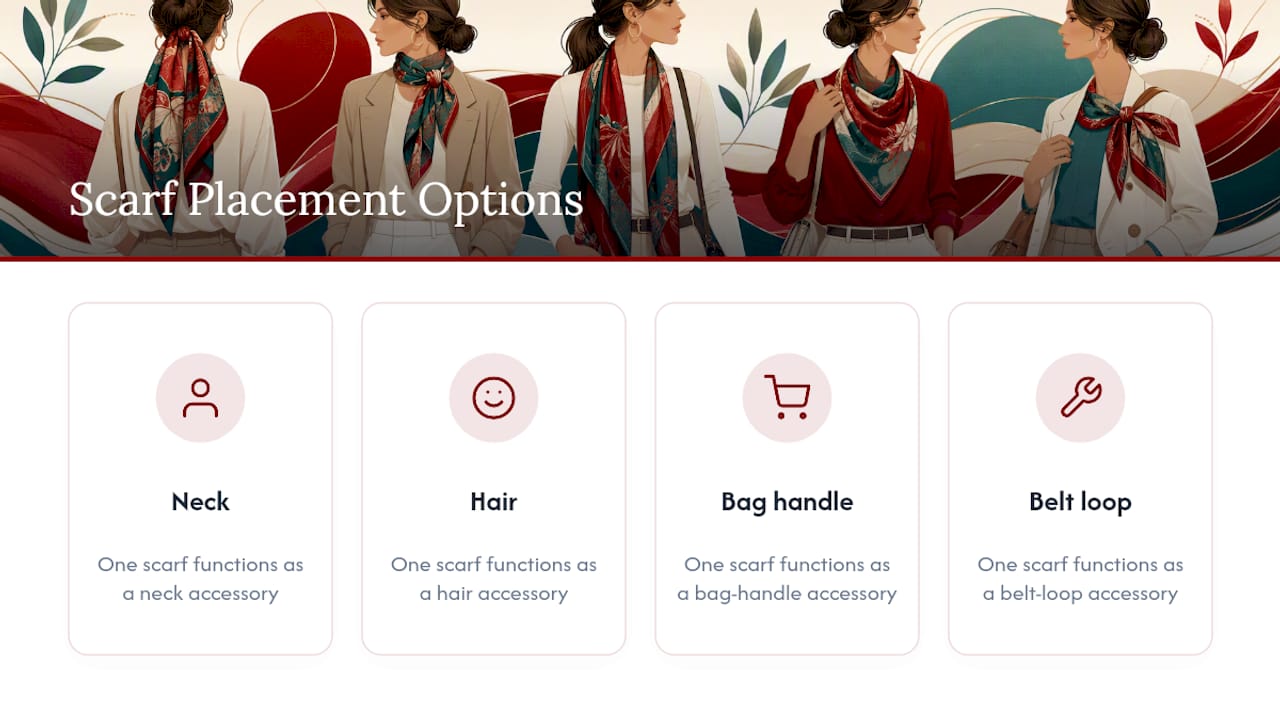
Scarves and hats. Neck knot, bag handle wrap, headband, or belt loop, four placements, endless mileage from one scarf. A hat becomes your focal point the moment you add it, so drop other statement pieces.
Sunglasses. Round faces suit angular frames; angular faces suit rounder ones. Oversized frames can carry the whole look solo.
A Two-Minute Accessorizing Checklist
Run through these seven steps before you leave the house, and you’ll never overthink an outfit again.
- Assess formality and silhouette. Is this a casual day, a work meeting, or an event?
- Choose your focal piece first. Statement earrings, a bold bag, or a standout belt, decide before anything else.
- Add up to two supporting categories. This keeps you inside the rule of three.
- Pick one lead metal or color to repeat across jewelry, bag hardware, or shoes.
- Check proportions. Big bag with delicate jewelry, or small bag with bolder pieces, avoid two heavy statements at once.
- Do the final mirror edit. Take one thing off before you walk out the door.
- Move. Sit, walk, reach for something. Accessories should survive real life, not just a still photo.
Statistic Callout: Stylist-authored accessorizing checklists consistently point to the same finding: a single well-chosen finishing piece, not a pile of them, is what readers report actually changes how an outfit reads.
Copy These Outfit-and-Accessory Recipes
Five capsule combinations cover nearly every occasion you’ll dress for this month. Screenshot this section.
- Everyday: Jeans and a tee, plus a crossbody bag, small hoops, and one pendant necklace. Three categories, zero decisions left to make.
- Work: A sheath dress or blazer set, paired with a structured shoulder bag, stud earrings, and a slim watch or a tonal belt at the waist.
- Evening: A simple black dress, elevated by statement earrings or a beaded clutch (pick one, not both) and tonal heels that match your skin tone or dress color.
- Travel: A crossbody or belt bag for hands-free movement, sunglasses, and one scarf worn three different ways, neck, hair, or bag handle, across a multi-day trip.
- Weekend: Sneakers, a slouchy tote, and one bold accessory, a graphic belt or chunky rings, to keep casual from reading sloppy.
These recipes lean on the same capsule accessory logic that stylists use to build dozens of outfits from a handful of pieces. If you’re building toward an event capsule specifically, holiday party outfit guidance walks through dress-code-specific pairings that slot right into the evening formula above.
Fix These Common Accessorizing Mistakes
Two focal points competing for attention is the single most common accessorizing mistake. If your eye jumps between a statement necklace and statement earrings, one has to go, always keep the one closer to your face if the neckline calls for it.
Proportion mismatches trip people up next: a tiny clutch with an oversized coat, or chunky boots with a delicate slip dress. Swap for a mid-size bag or shoe when the scale feels off.
Matching every metal and color exactly is a habit worth breaking. Repetition, not identical matching, is what creates cohesion. A gold necklace with gold-toned sandals and a cognac bag works better than head-to-toe identical gold.
- Two statement pieces competing → remove one
- Bag or shoe too small or too large for the outfit → resize
- Everything matched exactly → repeat instead of match
- Wrong neckline pairing → swap earrings for a pendant, or vice versa
Pro Tip: If you’re not sure which piece to cut, remove the newest addition first. It’s usually the one your eye added out of habit, not necessity.
Where Maronko Fashion’s Styling Guides Come In
Maronkofashion built a set of resources specifically to answer the “now what do I actually buy” question this article raises. The neckline jewelry guide matches necklace and earring styles to every cut from crew neck to halter. The layering necklace stacks post gives three shoppable combinations so you skip the trial-and-error phase entirely. A belting guide for dresses rounds out the set with proportion-specific advice.
Use the categories to implement the recipes above directly: browse Accessories for your focal piece and supporting jewelry, Dresses for evening and work capsule bases, and Tops for everyday pieces you’ll build neckline-based jewelry decisions around.
- Neckline Jewelry Guide: matches jewelry to collar and neckline shape
- Layering Necklace Stacks: three ready-to-copy combinations
- Belts With Dresses: proportion and placement guidance for one piece
How Do You Balance Colors and Patterns With Accessories?
Neutral accessories are your safety net when your outfit already carries a bold pattern or a saturated color. A floral dress or a striped top has enough visual information on its own, so let a tan bag, gold jewelry, or black sandals support it quietly.
Flip the ratio when your outfit is a solid neutral. A plain black dress or a monochrome suit is the moment to bring in a patterned scarf, a colorful bag, or beaded earrings as the payoff.
The trap to avoid is matching color for color across every piece, red bag, red shoes, red lipstick. That reads costume-like rather than styled. Instead, pull one color from your outfit’s pattern and repeat it in a single accessory. A floral dress with blue undertones pairs better with a blue-toned bag than with a “matching” floral scarf.
Pattern-on-pattern works too, but only with one point of contrast: scale. Pair a small-scale printed scarf with a solid outfit, or a large-scale patterned bag with a subtly patterned top. Two busy patterns of similar scale fight each other; two of different scale can coexist.
When in doubt, treat color the way you treat accessory count: pick one to feature, let the rest go quiet.
What Accessory Trends Should You Adapt Each Season?
Trends give you fresh options within the same core rules, they don’t replace them. For 2026, Vogue’s fall accessory roundup points to sculptural metal jewelry, silk scarves, wrap-style sunglasses, and brooches as the season’s standout categories, alongside a broader shift toward accessories that feel personal rather than purely trend-driven.
That sculptural metal jewelry trend slots directly into the “focal point” rule: a single oversized cuff or an architectural pendant can carry an entire simple outfit. If you want a deeper look at where that trend is heading, Maronkofashion’s jewelry trends roundup breaks down which shapes and finishes are worth building a capsule around.
Silk scarves deserve a permanent spot in your accessory drawer regardless of season, since the four placement options (neck, hair, bag handle, belt loop) let one scarf function as four different accessories across fall, winter, and into spring.
Brooches are the easiest trend to adopt without commitment: pin one to a plain coat lapel, a bag strap, or a hat brim, and remove it the moment you want your old look back.
The rule for adapting any seasonal trend to your existing wardrobe is simple: buy the trend piece as your one focal point for the season, and keep every supporting accessory neutral and unchanged. That way one purchase refreshes multiple outfits instead of requiring a whole new capsule.
How Do You Mix Metals and Materials With Confidence?
Mixing gold and silver isn’t a mistake anymore, it’s a deliberate styling choice, as long as you do it with intention rather than by accident. The easiest entry point is picking one metal to dominate (roughly 70% of your visible jewelry) and letting the second metal appear in a single accent piece, like a silver ring stacked among gold ones.
Materials work the same way. Leather, suede, straw, and metallic finishes can all appear in one outfit if one material leads and the others play a supporting role. A leather jacket, a straw bag, and gold jewelry work together because the leather and straw stay in their own lane while the gold repeats as the connecting thread.
The mistake to avoid is mixing metals and materials in equal proportion everywhere at once, gold earrings, silver necklace, rose gold watch, and a bag with brass hardware. That reads chaotic rather than intentional. Anchor everything to one dominant tone and treat every other metal or material as an accent, not a co-lead.
Textured pieces (hammered metal, woven straw, chunky knit) pair best against one smooth, simple surface elsewhere in the outfit. Two heavily textured pieces next to each other tend to compete rather than complement.
Can Accessories Really Upgrade a Basic Outfit?
A plain white tee and jeans is the single best canvas for testing everything in this article, because there’s nothing else competing for attention. Add one focal accessory, a statement necklace, a bold bag, or a great pair of sunglasses, and the entire outfit reads as intentional rather than thrown together.
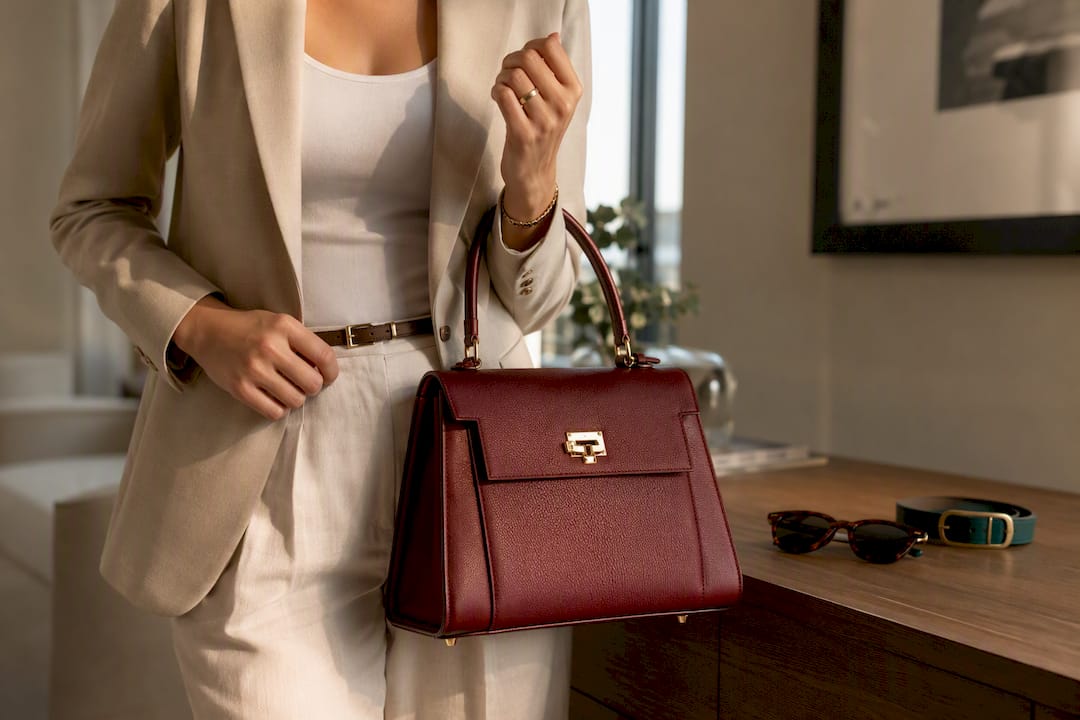
Basics work harder than trend pieces precisely because they disappear into the background, letting your accessory choices do all the visual work. A structured blazer over a plain tank becomes an outfit the moment you add gold hoops and a tailored belt. The blazer and tank haven’t changed; only the accessories have.
This is also where repetition earns its keep. Wear the same three or four accessory pieces across a week of basic outfits (jeans, tee, blazer, simple dress) and each one will look slightly different because the base pieces reflect the accessories back differently depending on neckline and silhouette.
If you own more basics than statement clothing, which most closets do, treat your accessory drawer as your actual styling budget. That’s where the visual interest should live.
How Do You Choose Accessories for Your Body and Personal Style?
Body type affects proportion more than it affects which accessories are “allowed.” Petite frames often look best with smaller-scale jewelry and mid-size bags, since oversized pieces can visually shrink the frame. Taller or curvier frames can carry larger-scale statement pieces without them looking like they’re wearing the person instead of the other way around. Neither rule is absolute, and personal style should always outrank a proportion guideline that doesn’t feel like you.
Personal style comes down to identifying which two or three accessory categories you reach for naturally. If you always gravitate toward bold earrings, build your capsule around jewelry and keep bags and belts simple. If bags are your thing, invest there and let jewelry stay minimal.
The fastest way to find your style is auditing what you already own and wear repeatedly. The accessories sitting in your drawer unused are the ones that don’t match your actual style, no matter how much you liked them in the store.
A Final Word on Keeping It Simple
Every rule in this article boils down to the same instinct: pick less, choose well, repeat what works. I’d rather you master one focal-point trick than memorize ten styling theories you’ll never use standing in front of a closet at 7 a.m.
Build a small capsule. Try one new piece this week, that’s the whole assignment.
— Abdul
Shop the Pieces That Make These Rules Work
Every recipe in this article works better with the right pieces on hand, and that’s exactly what an accessories collection like Maronkofashion’s is built for. You’ll find everyday jewelry for the neckline rule, structured bags for the work capsule, silk scarves for the four-placement trick, and belts to shape any dress in one move.

Building out a small accessory capsule with one focal piece, one supporting bag, and one versatile scarf can be affordable and accessible. If you want more before you shop, the neckline jewelry guide and layering necklace posts on the Maronkofashion blog walk through exact pairings for your wardrobe. When you’re ready to put a capsule together, browse the Accessories collection and start with one focal piece, then build out from there.
Sources
- How to Accessorize Outfits: The Art of the Finishing Touch - Susan Padron Stylist
- The Complete Accessories Guide: How to Elevate Any Outfit in 2026 - Style Blooming
FAQ
How do I accessorize my outfit?
Pick one focal accessory first, then add up to two supporting categories, jewelry, bag, belt, shoes, scarf, or sunglasses, and stop. Match the formality of your accessories to the outfit, and repeat one metal or color across pieces to tie everything together.
What makes a woman look wealthy?
Fewer, better-chosen pieces read as more expensive than a lot of matched accessories. Repetition of a single metal tone, clean proportions, and one confident focal point consistently look more polished than piling on multiple statement items at once.
What are the trendy accessories for 2026?
Sculptural metal jewelry, silk scarves, wrap-style sunglasses, and brooches lead the 2026 accessory trends according to Vogue’s fall roundup. Personality-driven, purposeful pieces are outranking pure trend-chasing this season, which fits naturally with the one-focal-point rule.
What is the 3-3-3 rule for outfits?
The 3-3-3 rule is a capsule wardrobe strategy using three tops, three bottoms, and three pairs of shoes to generate multiple outfit combinations from a small set of pieces. It pairs well with a small accessory capsule, since fewer clothing pieces mean your accessories carry more of the styling weight.
Does Maronkofashion sell the accessories mentioned in this article?
Yes, Maronkofashion’s Accessories collection carries jewelry, bags, scarves, and belts that fit directly into the capsule recipes covered here. Current prices and availability are listed on the site, and some orders ship free.