


15 Piece Work Capsule Wardrobe for Career Women Who Want to Buy Less
A work capsule wardrobe is a small, coordinated set of clothes designed so every piece mixes with almost every other piece, cutting morning decision-making down to minutes. Start with 15 pieces built around a blazer, a white shirt, tailored trousers, two neutral shoes, and one tote. That business-casual template covers most office dress codes without overbuying. Your next move: spend 30 minutes pulling everything you already own into “keep, tailor, donate” piles before you buy a single new thing.
TL;DR:
- A 7-piece micro capsule wardrobe can fully support a five-day workweek for remote workers or travelers by emphasizing core, mixable pieces.
- The 15-piece business-casual capsule is ideal for hybrid schedules, providing enough variety to avoid repeats while maintaining decision speed.
- Five key items—blazer, white button-up, tailored trousers, neutral shoes, and a structured tote—drive the versatility and coherence of any work capsule.
- Outfit formulas based on a simple top-plus-bottom-plus-layer-plus-shoe structure create dozens of interchangeable looks with only a handful of pieces.
- Building the capsule gradually through closet audits and focusing on fit-critical anchors ensures a functional wardrobe tailored to your schedule and style.
Table of Contents
- What a Work Capsule Wardrobe Actually Does for Your Closet
- Four Ready-to-Wear Capsule Templates You Can Copy Today
- The Five Pieces That Multiply Every Outfit You Own
- Outfit Formulas That Kill Decision Fatigue
- How to Audit Your Closet and Build the Capsule in 90 Days
- Seasonal Swaps Without a Full Wardrobe Rebuild
- Behind This Guide: What Shapes Our Capsule Advice
- What a Capsule Wardrobe Actually Costs, Piece by Piece
- Why the “Perfect Capsule” Advice Usually Backfires
- Shop the Pieces That Fill Your Capsule Gaps
- Sources
- FAQ
What a Work Capsule Wardrobe Actually Does for Your Closet
The whole point of a work capsule wardrobe is mix-and-match speed. You’re not buying fewer clothes for the sake of minimalism, you’re buying the right clothes so every top works with every bottom and you stop standing in front of your closet at 7 a.m. wondering what goes with what.
Capsule size should match your actual week, not some arbitrary rule you found online. A commuter with a predictable five-day office schedule needs different math than someone whose remote three days and client-facing two.
- Micro (7 to 8 pieces): Best for fully remote workers or frequent travelers who need a compact, repeatable rotation. A 7-piece work capsule can genuinely carry a full workweek when the pieces are chosen well.
- Lean (12 to 15 pieces): The sweet spot for hybrid schedules, roughly two or three office days a week.
- Versatile (15 to 20 pieces): The most commonly recommended range for business-casual offices, and where most women land after their first audit.
- Professional spine (30 pieces): For roles with more formal dress codes, frequent client meetings, or seasonal variety needs.
More pieces mean more variety but slower decisions. Fewer pieces mean faster mornings but you’ll repeat outfits sooner. Neither is wrong. It depends on how much you value novelty versus speed.
Four Ready-to-Wear Capsule Templates You Can Copy Today
Each template below breaks down by category so you can see exactly what to buy or already own.
- The 7-piece micro capsule. One blazer, one white button-up, one knit top, two pairs of trousers (one black, one neutral), one pair of pointed flats, one crossbody bag. This tiny set produces a surprising number of outfits because nothing in it is a wildcard. Every piece was chosen to pair with at least three others.
- The 15-piece business-casual capsule. Add a second blazer in a different neutral, a third top, one sweater, a midi skirt, a pair of ankle boots, and a tote. This is the range most guides point to as the practical spine for typical office jobs. It’s enough variety to go two weeks without an obvious repeat.
- The 18-piece formula capsule. Layer in a trench or structured coat, a print top for personality, one more pair of trousers, and a second bag for client days. Using a simple outfit formula, 18 pieces can produce more than 40 distinct combinations.
- The 30-piece professional wardrobe. Expand across three blazers, four bottoms, eight tops, three layers, four shoes, and accessories. This size suits leadership roles or offices with stricter dress codes, where repetition is more noticeable.
Swap any single item for your own style without breaking the math. As long as the replacement holds the same neutral or fits the same silhouette role, the formula still works.
The Five Pieces That Multiply Every Outfit You Own
Not every item in your closet pulls equal weight. Five anchor pieces do most of the heavy lifting in any work capsule wardrobe, and getting them right matters more than the rest of the list combined.
- The blazer. Stylists consistently point to it as the highest-impact single investment you can make for a professional wardrobe. It instantly dresses up jeans, a dress, or trousers.
- The white button-up. The most neutral top you can own. It layers under sweaters, under blazers, or stands alone.
- Tailored trousers. Pick a straight or slightly wide leg in a fabric with a little stretch so they move with your day.
- Neutral shoes. One flat, one slightly dressier option, both in black, nude, or cognac.
- A structured tote. Big enough for a laptop, polished enough for a client meeting.
Fit is non-negotiable on all five. A blazer that pulls across the shoulders or trousers that pool at the ankle will undercut even the most thoughtfully built capsule. Prioritize a tailor visit over a new purchase if something almost fits.
Stick to a two-neutral, one-accent color rule: pick one dark neutral (navy or black), one light neutral (cream or camel), and let everything else revolve around those two. This is what makes 15 pieces behave like 30.
Pro Tip: Buy your trousers and blazer in the same exact black rather than “close enough” black. Two near-matching blacks worn together look more mismatched than an intentional color-block outfit.
Outfit Formulas That Kill Decision Fatigue
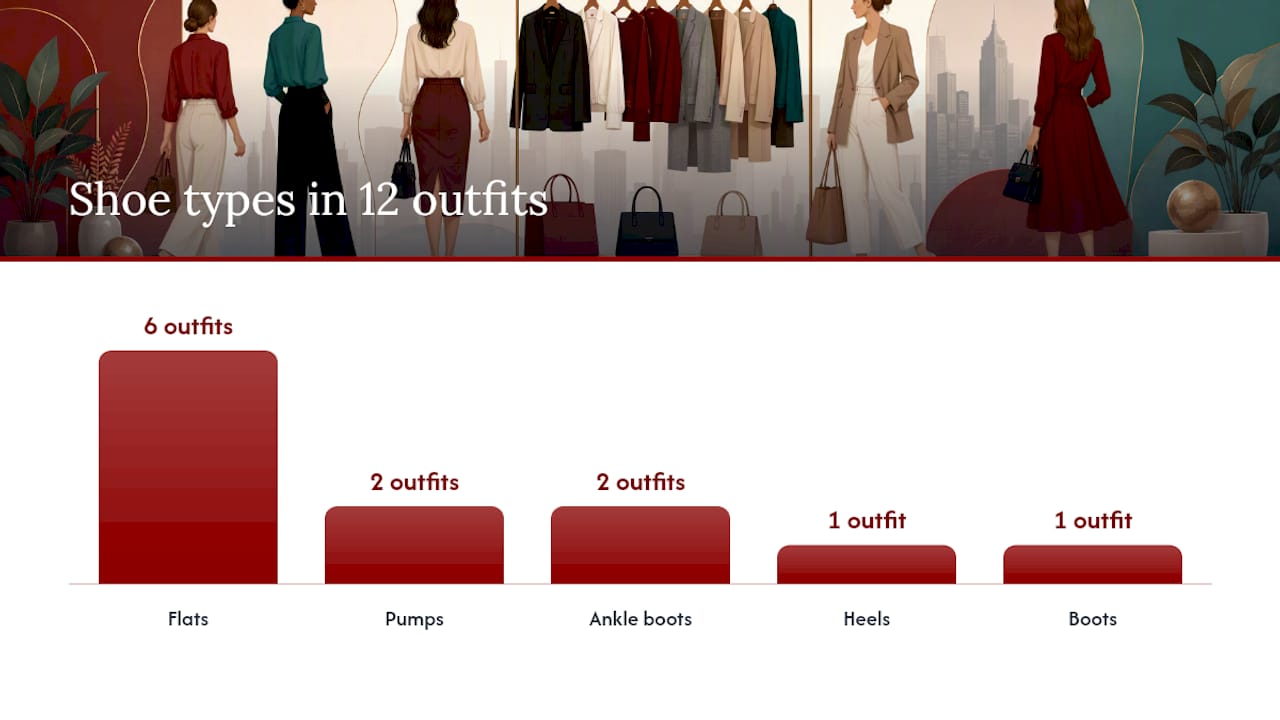
The formula behind every high-functioning capsule is Top plus Bottom plus Layer plus Shoe. Change one variable and you get a new outfit without touching the other three. This is how small closets produce dozens of looks instead of a handful.
Twelve combinations to start with:
- White shirt + black trousers + navy blazer + flats
- Knit top + midi skirt + trench + ankle boots
- Print top + black trousers + navy blazer + pumps
- White shirt + midi skirt + cardigan + flats
- Sheath dress alone + blazer + heels
- Knit top + navy trousers + trench + flats
- White shirt + black trousers + cardigan + boots
- Print top + midi skirt + navy blazer + flats
- Sheath dress + cardigan + flats (no blazer needed)
- White shirt + navy trousers + blazer + pumps
- Knit top + black trousers + trench + ankle boots
- Print top + navy trousers + cardigan + flats
To move any of these from desk to dinner, swap one piece: trade flats for heels, or drop the blazer and add a bold necklace. That single swap principle is exactly what WhoWhatWear highlights when they talk about injecting personality into a seasonal capsule without losing interchangeability. For client days or a big interview, this same one-swap logic on a polished interview outfit formula will get you there fast.
How to Audit Your Closet and Build the Capsule in 90 Days
Building a capsule works best as a staged project, not a single weekend shopping trip.
- Run a 30-minute closet audit. Pull every work-appropriate piece out and sort into four piles: keep as-is, tailor, donate, replace. Be honest about fit. If you haven’t worn it in a year because it doesn’t sit right, it goes in the tailor or donate pile, not back on the hanger. This audit-first approach is exactly what practical capsule guides recommend before anyone opens their wallet.
- Make a gap list, ranked by multiplier value. A tailored trouser that works with six existing tops ranks higher than a trendy print blouse that works with two. Budget in tiers: fit-critical pieces (blazer, trousers) get the biggest allocation, tops and accessories get the rest.
- Buy in this order. Fit-critical anchors first, since they’re hardest to get right and most expensive to replace often. Tops and layers next. Accessories and any statement pieces last.
- Try on, then commit to a return policy. Order two sizes if you’re unsure, and check the return window before you buy so a bad fit doesn’t quietly become a permanent bad habit.
- Run a 90-day wear test. Track what you actually reach for. Anything untouched after three months either doesn’t fit your style as well as you thought, or it’s the wrong color to pair with the rest of your capsule. Replace it once, don’t rebuild the whole thing.
Pro Tip: Keep your gap list in your phone’s notes app and add to it whenever you almost buy something impulsive in a store. Nine times out of ten, the urge fades by the time you’re home, and the list keeps you focused on what actually fills a hole.
If closet space is part of your problem, not just wardrobe content, a well-organized closet system makes the capsule easier to see and use every morning. A capsule you can’t actually locate at 7 a.m. isn’t doing its job.
Seasonal Swaps Without a Full Wardrobe Rebuild
Keep your 15 to 20 core pieces intact year-round and treat seasons as a light edit, not a renovation. The best practice is limiting seasonal swaps to just four to six items.
- Spring and summer swaps: lighter-weight trousers, short-sleeve blouses, a lightweight blazer in linen or cotton blend, and open-toe flats for casual Fridays.
- Fall and winter swaps: a wool coat, a chunky cardigan, ankle boots, and one or two sweaters in your accent color.
Care determines how long any of this lasts. Steam wool blazers between wears instead of ironing, since heat and pressure flatten structured shoulders over time. Save the iron for cotton shirts, where a crisp finish actually helps. Rotate your two pairs of work shoes rather than wearing one into the ground, and get heels resoled before the sound of a bare heel hitting pavement tells you it’s too late.
Behind This Guide: What Shapes Our Capsule Advice
This guide draws on stylist-backed capsule research and work dressing career-focused shoppers on a budget, written under Abdul’s editorial direction. The catalog is built around versatile, affordable womenswear, including workwear, dresses, and tailored separates, with free shipping on orders over $100 to make filling capsule gaps easier without a big upfront spend. Two-piece sets slot into the “tailored trouser plus top” formula, midi dresses cover the one-and-done meeting outfit, and blouses fill the layering role in almost any of the four templates above.
What a Capsule Wardrobe Actually Costs, Piece by Piece
Budgeting for a capsule works better as cost-per-wear than sticker price. A $120 blazer worn twice a week for two years costs you about $0.58 per wear. A $35 trendy top worn four times before it looks dated costs nearly $9 per wear. The cheaper item is the worst deal.
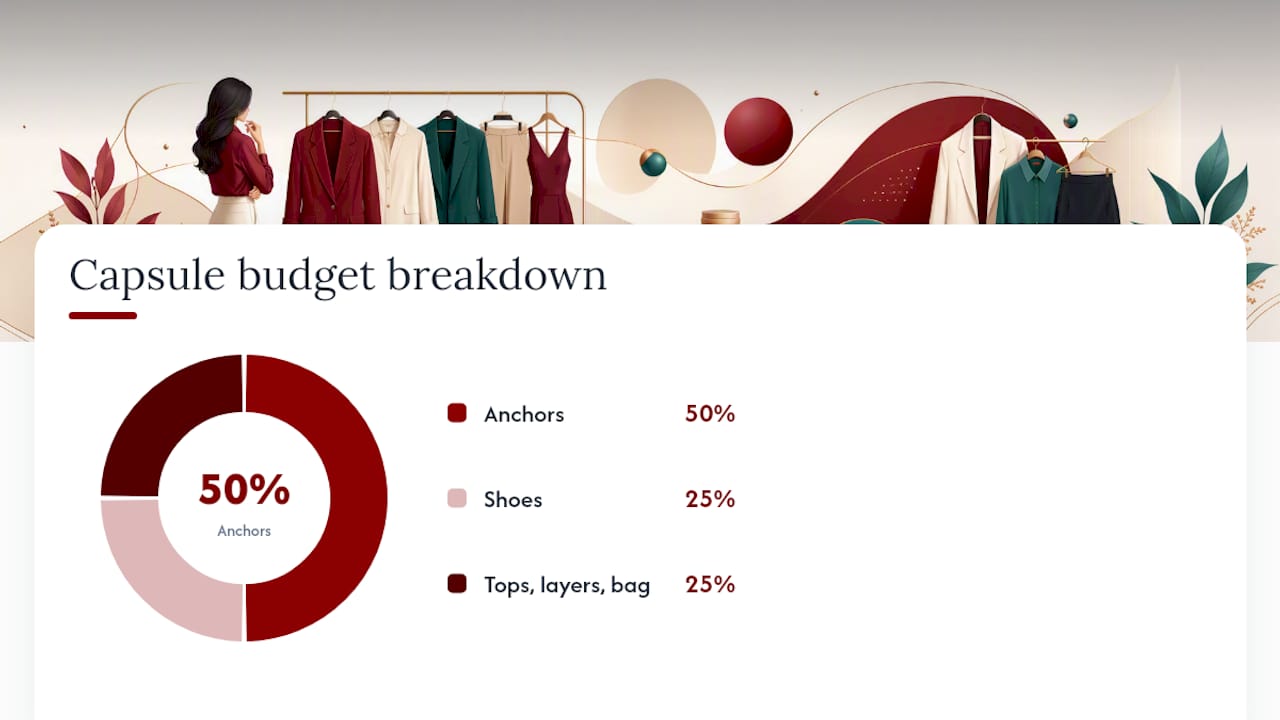
Split your budget into tiers instead of spreading it evenly across every item. Anchors like your blazer and trousers deserve the biggest share, because they touch nearly every outfit and take the most wear-and-tear. Tops and layers can flex lower, since you’ll rotate more of them and replace them more often anyway.
A realistic first-capsule budget breaks down roughly like this: half your money on two to three anchor pieces (blazer, trousers), a quarter on shoes, and the remaining quarter split across tops, layers, and one bag. You don’t need to buy the whole capsule at once. Build the anchors first, live with them for a month, then fill gaps as you notice them rather than guessing upfront.
Secondhand and consignment shops work well for the pieces you’ll wear the longest, since a well-tailored blazer or trouser doesn’t need to be new to fit perfectly. Save your new-purchase budget for the pieces where fit and fabric consistency matter most, like foundational shapewear or your everyday shoes.
Why the “Perfect Capsule” Advice Usually Backfires
Most capsule wardrobe content treats piece count like a religion, as if 33 items is objectively correct and 34 is failure. That’s backwards. The number matters far less than whether every piece earns its spot by pairing with multiple others.
Where conventional advice really falls short is the obsession with buying a complete capsule in one trip. Nobody builds a functional wardrobe in a weekend, and treating it like a checklist to clear invites impulse buys of trendy, fussy pieces that look great on a hanger and terrible after two washes.
Prioritize the audit before the purchase, every time. Most closets already have three or four capsule pieces hiding in the back, mismatched only because nothing else was designed to pair with them. Buy your anchors, especially the blazer and trousers, before anything decorative. Everything else is easier to get right once those two fit perfectly.
— Abdul
Shop the Pieces That Fill Your Capsule Gaps
This collection is designed for exactly this kind of project: filling specific capsule gaps without paying boutique markups or waiting on a tailor’s schedule. If your gap list says “tailored trouser alternative,” the V-neck ruffle top and wide-leg pants two-piece set covers that slot in one order, giving you a coordinated top and bottom that already pair by design. Need a one-and-done option for meeting-heavy days? The V-neck midi dress works as a single capsule entry that pairs with your existing blazer and flats.

Start by writing your own three-item gap list tonight: one anchor, one top, one shoe. Then check what’s already sitting in your cart against the free shipping threshold on orders over $100, since bundling your gap-fillers into one order gets you there fast without adding pieces you don’t actually need.
Sources
- Work Capsule Wardrobe: 15 Essential Pieces for Every Office
- The Ultimate 7-Piece Work Capsule Wardrobe That’s Both Chic and Office Appropriate
- Work Capsule Wardrobe: 18 Pieces, 40+ Outfits
- 2026 Winter Workwear Capsule Wardrobe - Pumps & Push Ups
- These 7 Pieces Are Key For An Autumn Workwear Capsule Wardrobe in 2026 | Who What Wear
FAQ
What is a work capsule wardrobe?
It’s a small, coordinated set of clothing, typically 15 to 20 pieces, chosen so every top, bottom, and layer can mix with most of the others, cutting down on decision fatigue and closet clutter.
What is the 3-3-3 rule for capsule wardrobes?
It’s a minimalist exercise using just 3 tops, 3 bottoms, and 3 pairs of shoes to test the capsule concept, often used by travelers or beginners before committing to a full build.
What is the 5-4-3-2-1 packing rule?
Definitions vary across sources, but it generally refers to a travel packing framework limiting outfits to a small fixed number of each category (such as 5 tops, 4 bottoms) rather than a capsule wardrobe rule itself.
What makes a woman look put together at work?
Fit and color consistency matter more than trend pieces. A well-tailored blazer, one or two reliable neutrals, and shoes in good repair read as polished far more reliably than logo pieces or fast-fashion trends.
How many pieces should a work capsule wardrobe have?
Most business-casual capsules land between 15 and 20 pieces, though a lean 7-piece version suits remote workers and a 30-piece professional spine suits stricter dress codes.