


3 Copyable Layering Necklace Stacks to Buy at Maronko
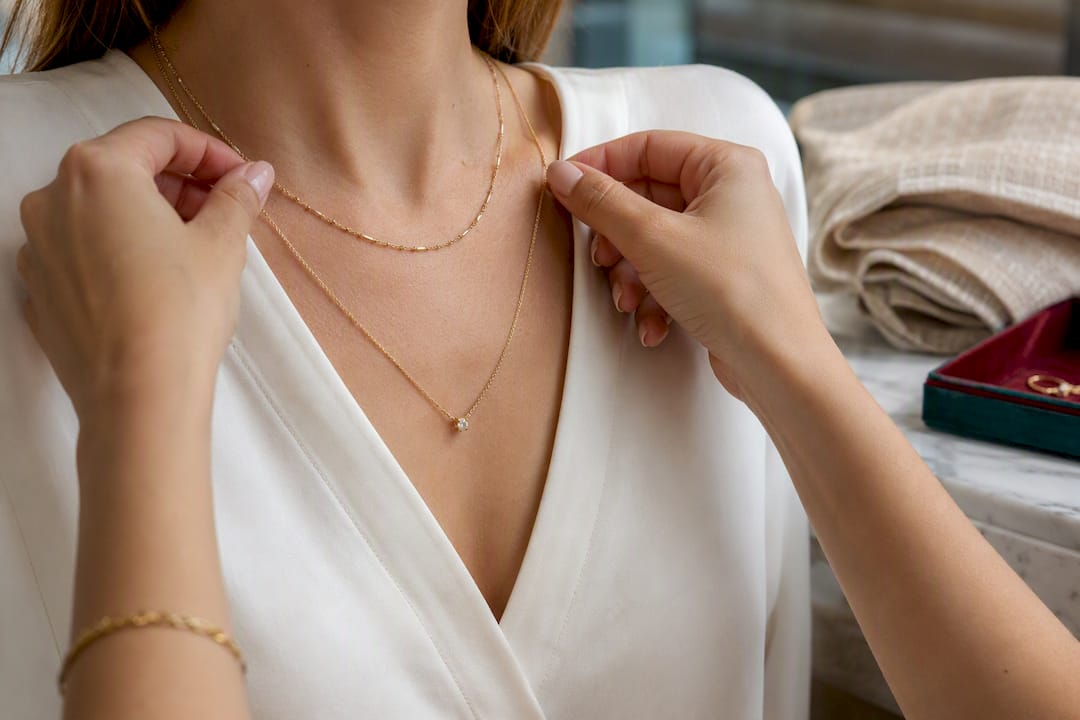
The easiest way to layer necklaces is a 2 to 3 piece stack at staggered lengths, anchored by one focal piece, with about 2 inches of space between each chain. Start with one of the copyable combos below, and you’ll have a polished stack before you even reach for a mirror.
TL;DR:
- Layer necklaces with about 2 inches of space between each, anchoring the stack with one focal piece to keep it balanced.
- Use three main combos: a dainty everyday stack, a polished office look, and a dramatic evening style, adjusting lengths with extenders if needed.
- Match necklace lengths to your frame and neckline, choosing shorter chains for high necklines and longer chains for open collars or turtlenecks.
- Vary chain textures and metals, favoring heavier chains at the bottom and starting with a dominant metal to keep the stack cohesive.
- Limit daily layering to two or three necklaces to avoid clutter and tangling, and always fasten from shortest to longest for better order.
Table of Contents
- How to Layer Necklaces: Three Go-To Combos That Actually Work
- Necklace Layering Lengths and Spacing: A Practical Measurement Guide
- Mixing Chain Types and Metals Without Looking Messy
- Matching Layered Necklaces to Your Neckline
- Anti-Tangle Tactics That Actually Keep Your Stack Tidy
- How Many Necklaces to Layer (and When to Stop)
- Why Trust This Guide
- Shop Layering-Ready Necklaces at Maronko Fashion
- A Stylist’s Take on Building Your Stack Slowly
- Sources
- FAQ
How to Layer Necklaces: Three Go-To Combos That Actually Work
You don’t need a jewelry box overflowing with chains to nail layering necklaces. You need three good lengths, a plan, and a focal piece that gives your eye somewhere to land. Stylists often recommend anchoring a stack with one “hero” piece so the rest of the chains support it instead of competing for attention.
- Everyday stack: A dainty chain paired with a small pendant on a slightly longer chain. Low maintenance, works with a plain tee, and takes about ten seconds to put on. This is the combo to keep on your nightstand for grab-and-go mornings.
- Office stack: A layered combination of a choker, a pendant chain, and a longer chain that peeks out under a blazer collar without looking cluttered. It reads polished, not costume-y, which matters when you’re in meetings all day.
- Evening stack: A bold statement choker paired with a longer medallion or lariat to create drama without needing many necklaces.
Missing an in-between length? A 2-inch extender solves that instantly, and it’s far cheaper than buying three new chains. Pendant styles including the Initial Heart Pendant Necklace work well as the anchor piece in any of these three combos.
Necklace Layering Lengths and Spacing: A Practical Measurement Guide
Getting the lengths right matters more than getting the metals right. A common effective combo for a three-piece stack uses staggered lengths that keep each chain visually separate rather than piling on top of each other., according to TheCaratCut’s layering guide.
- Petite frames often use shorter lengths so nothing swings below the bust line.
- Taller or fuller frames may choose longer chains for better proportion.
- Aim for enough space between each necklace to prevent overlap and tangling. Check it by clasping all your pieces and looking straight down. If two chains land in the same spot, one needs to move.
- Extenders are your best friend when a chain lands an inch short of where you want it. Match the extender’s metal to the chain itself. A gold extender on a silver chain looks like an accident, not a choice.
- Clasp compatibility matters too. Lobster clasps handle daily on-and-off better than spring rings, especially on heavier pieces.
Mixing Chain Types and Metals Without Looking Messy
Texture is what makes a stack look intentional instead of thrown together. Pairing a paperclip chain with a delicate cable chain, or a rope chain with a fine box chain, gives your eye something to distinguish between each layer. Stylists consistently point to varying chain textures as one of the simplest ways to reduce tangling while creating clear visual separation between pieces.
- Keep your heaviest, thickest chain as the lowest layer. It anchors the stack visually and physically.
- A rough width guide: 1mm to 1.5mm for your shortest chain, 1.5mm to 2mm for the middle, and anything bolder for your statement piece on bottom.
- Rope and curb chains pair beautifully with a plain cable chain; two similar textures side by side tend to blend into a blur.
Pro Tip: Start metal mixing at a 70/30 ratio. Pick one dominant metal for most of your stack, then let a single accent piece in a different metal break it up. Anything closer to 50/50 starts to look unplanned rather than styled.
Matching Layered Necklaces to Your Neckline
Your neckline should decide your stack shape before your closet does. A stylist’s first move is always to read the garment, then build the layers to fit it, rather than forcing a favorite stack onto every outfit.
- V-neck: Lean into graduated Y-shaped or pointed pendants that follow the neckline’s angle downward.
- Crew neck: Keep it shorter. A stack that sits above the collarbone avoids competing with the higher neckline.
- Button-down or open collar: A choker paired with one mid-length pendant slips neatly into the open V of the collar.
- Turtleneck: This is where longer chains and a lariat shine. Let them sit on top of the fabric rather than tucking underneath.
For a deeper breakdown by cut, the neckline jewelry guide on the Maronko blog walks through pairings for necklines this list doesn’t cover.
Anti-Tangle Tactics That Actually Keep Your Stack Tidy
Tangling is almost always a hardware problem, not a bad-luck problem.
- Use a spacer or multi-clasp connector once you’re wearing three or more pieces. It keeps each chain in its lane instead of sliding toward the center of your chest.
- Choose lobster clasps for heavier chains. Spring rings tend to pop open under weight, which is exactly when tangling starts.
- Fasten shortest to longest, one at a time, checking each in the mirror before adding the next. This single habit prevents most of the knotting problems people blame on the necklaces themselves.
- Store necklaces separately or hang them on hooks rather than tossing the whole stack in a drawer, where clasps snag on each other overnight.
- Favor solid metals over plated pieces for anything in a daily high-friction stack. Solid 14k gold resists bending better than higher-purity gold on fine chains under 1.5mm, which matters when chains are rubbing against each other all day.
How Many Necklaces to Layer (and When to Stop)
Two to three necklaces is generally recommended for daily wear. It’s flattering, low effort, and hard to overdo. Retailers and stylists alike tend to land on this range as the safest default for everyday styling.
Push to three or four pieces for a deliberate, editorial look, but only if you’ve built in real contrast between textures and lengths. Beyond four necklaces, spacing and texture variety stop being optional; they’re the only thing keeping the stack from looking cluttered.
- If a stack feels crowded, remove the piece with the least contrast, not the shortest one.
- If two chains keep landing in the same spot, that’s a length problem, not a bad-luck problem. Swap one for a different measurement.
- One focal piece per stack. Two “statement” pieces fighting for attention is the fastest way to undo an otherwise good combo.
Why Trust This Guide
This guide comes from a blog author named Abdul who covers styling fundamentals like neckline pairing and seasonal jewelry trends for a fashion editorial team. You can find more of that reasoning in the jewelry trends roundup and the neckline guide referenced throughout this article. Layering-friendly pieces are stocked across an accessories collection, and orders over $100 ship free, which makes building out a full stack a lot less risky to try.
Shop Layering-Ready Necklaces at Maronko Fashion
This store is the direct route to the exact pieces this guide describes, no guesswork required about which pendant will actually work as your focal point. The accessories collection is organized around the lengths and layers covered above, and pieces like the Initial Heart Pendant Necklace work as a ready-made anchor for any of the three starter stacks.

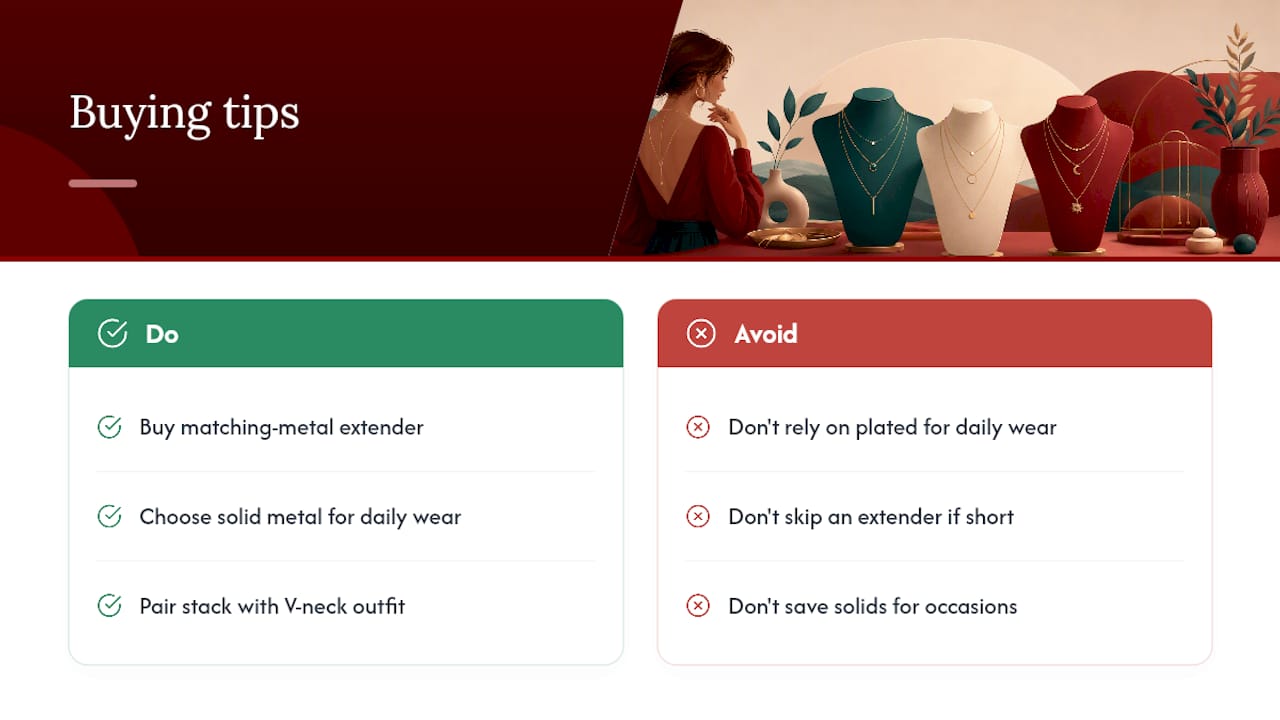
A couple of buying tips before you check out: grab a matching-metal extender if a chain lands an inch short of your target length, and lean toward solid metal pieces for anything you plan to wear daily rather than saving for occasions. Plated pieces are fine for the occasional evening stack, but they wear faster in a high-friction daily layer.
Building a work-ready look? Pair your new stack with the V-neck ruffle top and wide leg pants set for an outfit that gives your layers somewhere polished to sit. Browse the accessories collection now and build your stack one piece at a time.
A Stylist’s Take on Building Your Stack Slowly
Nobody nails their perfect stack on the first try, and that’s fine. Buy one solid pendant you love, then add lengths around it over time instead of purchasing five chains at once. The Maronko blog’s jewelry trends coverage is a good place to keep tracking what’s worth adding next.
— Abdul
Sources
Length and spacing guidance in this article draws on TheCaratCut’s layering guide for measurement rules, Mejuri’s styling guide for texture and metal mixing, Parade’s stylist roundup for focal-piece advice, and Catbird’s step-by-step guide for anti-tangle hardware.
- How To Layer Necklaces (2026 Guide) | TheCaratCut
- How to Layer Necklaces Like a Pro | Styling Tips and Trends
- How to Layer Necklaces Like a Stylist | A Step-by-Step Guide | Catbird
FAQ
What is the trick for layering necklaces?
Stagger your lengths with about 2 inches of space between each chain, and pick one focal piece so the rest of the stack supports it instead of competing with it.
Is layering necklaces still in style in 2026?
Yes. Layering has held steady as a mainstream styling approach for years, and stylists continue to recommend it as a low-effort way to elevate a simple outfit.
How do I layer necklaces without them tangling?
Fasten your necklaces from shortest to longest, use a spacer or multi-clasp connector once you’re past two pieces, and store them separately rather than tossing the whole stack in a drawer.
How do I start layering necklaces as a beginner?
Begin with just two pieces at different lengths, such as 16 inches and 18 inches, and add a third only once that combo feels easy to wear and put on.
How many necklaces should I layer at once?
Two to three necklaces works best for daily wear; save four or more for occasions where you have time to balance texture and spacing carefully.